Best Sunsets in Hawaii: Where and When to Catch Golden Hour on Oahu
12 min readHawaii Picnics by Wember
The best sunset in Hawaii runs from about 5:55 p.m. in December to roughly 7:15 p.m. in June, and the best place to watch it is any west-facing shore on Oahu — Ko Olina, the North Shore, or Waikiki — where the sun drops straight into the open Pacific with nothing in the way. Arrive 30 minutes early. Stay 20 minutes after. That is the whole secret.
Everything else is detail. Worth-the-trip detail, but detail.
Here is what nobody tells you on the flight over: in Hawaii, the best show of the day is free. People drop $400 on a luau and then catch the sunset by accident from a parking lot. Do it on purpose instead. I watch the sun set on Oahu for a living, and I still stop what I am doing every single evening — so let me save you the guesswork.
Table of Contents
- What time is sunset in Hawaii?
- The west side wins
- The best sunset spots on Oahu
- Sunset on the other islands
- Turn a free sunset into a memory
- FAQ: Hawaii sunsets

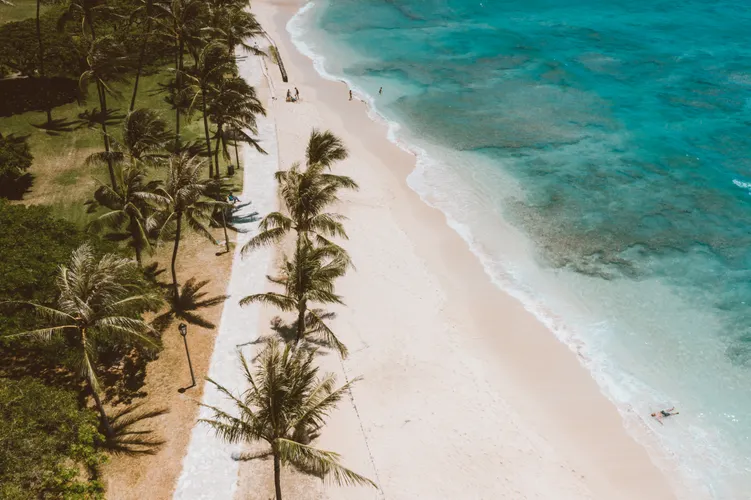
Photo by Tim Mossholder via Pexels
What time is sunset in Hawaii?
Plan around this one number and you will never miss it. Hawaii sits near the tropics, so sunset barely swings across the year compared to the mainland — but it swings enough to wreck a dinner reservation if you guess. Here are the approximate sunset times for Honolulu, month by month:
| Month | Sunset (approx.) |
|---|---|
| January | 6:05 p.m. |
| February | 6:25 p.m. |
| March | 6:40 p.m. |
| April | 6:50 p.m. |
| May | 7:00 p.m. |
| June | 7:15 p.m. |
| July | 7:15 p.m. |
| August | 7:00 p.m. |
| September | 6:35 p.m. |
| October | 6:10 p.m. |
| November | 5:55 p.m. |
| December | 5:55 p.m. |
Two rules beat the exact minute every time:
- Arrive 30 to 45 minutes early. Golden hour — the soft, gold, everyone-looks-good light — happens before the sun touches the water. Show up at sunset-o'clock and you have already missed the best part.
- Stay 15 to 20 minutes after. The loudest pinks and oranges often land after the sun is technically gone, while the people who left early sit in traffic.
Hawaii does not observe daylight saving time, so the clock drifts gently. Confirm the exact day on timeanddate.com's Honolulu page and work backward from there.
The west side wins
The sun sets in the west. Groundbreaking meteorology, I know — but you would be amazed how many visitors set up on an east-facing beach and wonder why the sun is behind a mountain.
For a sunset you want one thing: an open western horizon over the ocean. On Oahu that means the leeward (west) and south shores — Ko Olina, Kapolei, Waikiki, Ala Moana — plus a couple of lookouts that cheat their way to the view with altitude. The windward (east) side is for sunrises. Gorgeous, different alarm clock.
The west side has a second advantage: it is drier. The trade winds dump their rain on the windward mountains and reach the leeward coast wrung out, which is why the sky tends to be clearer right when you want it. Pick a west-facing spot and you will be right far more often than wrong.
The best sunset spots on Oahu
Ko Olina Lagoons: the most reliable sunset on the island
If I get one pick — and I do, professionally — it is Ko Olina. Four sheltered, west-facing lagoons in Kapolei: calm water, easy parking, and the most consistent sky on the island because you are staring straight down the open Pacific. No headland, no mountain, just sun into ocean.
It is the location people request most, and it is not close. If you are staying out here, book an ocean-view room on the west side and you can walk to golden hour in flip-flops. Best for couples, proposals, and anyone who wants the postcard without the Waikiki crowd.
A few specifics that save the evening: there are four lagoons, numbered one through four, each with its own free parking lot that fills fast on weekends and holidays — arrive 45 minutes early in summer to get a stall and a patch of sand. Lagoon 1 (Kohola) sits by the Four Seasons and is the busiest; lagoons 3 and 4 are quieter. A flat coastal path links all four, so if your spot gets crowded you can stroll to the next one in five minutes. The water is calm enough for kids, and the whole stretch faces dead west, which is the entire point.
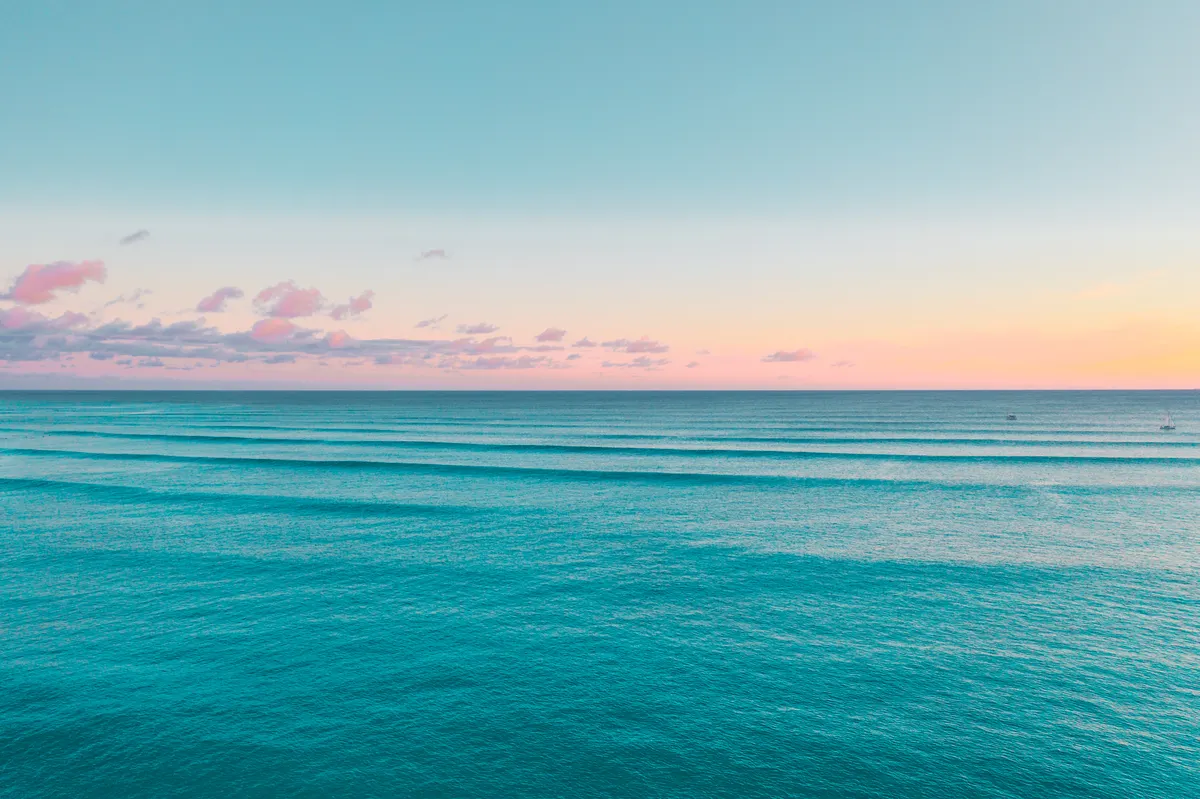
Photo by Jess Loiterton via Pexels
The North Shore: sky show and wave show in one
Sunset Beach earns its name. In winter — roughly November through February — this is the surf capital of the planet, so you get a sky and a wave show at once. In summer the same water goes glassy. Waimea Bay next door is the wide, cinematic option.
Two honest notes. It is a 60 to 75 minute drive from Waikiki, so you will want to rent a car for this one — or let a North Shore circle-island tour handle the driving — and leave before 3 p.m. in winter, because the surf crowds turn the two-lane Kamehameha Highway into a parking lot. The classic stretch runs from Ehukai (the Banzai Pipeline) to Waimea Bay, and any of those pull-offs works. Make a night of it: the food trucks and shrimp shacks in Haleiwa are ten minutes back toward town and stay open after dark. One more time, because it matters: the winter surf here is genuinely dangerous. Come for the sunset, respect the ocean, and never turn your back on it.
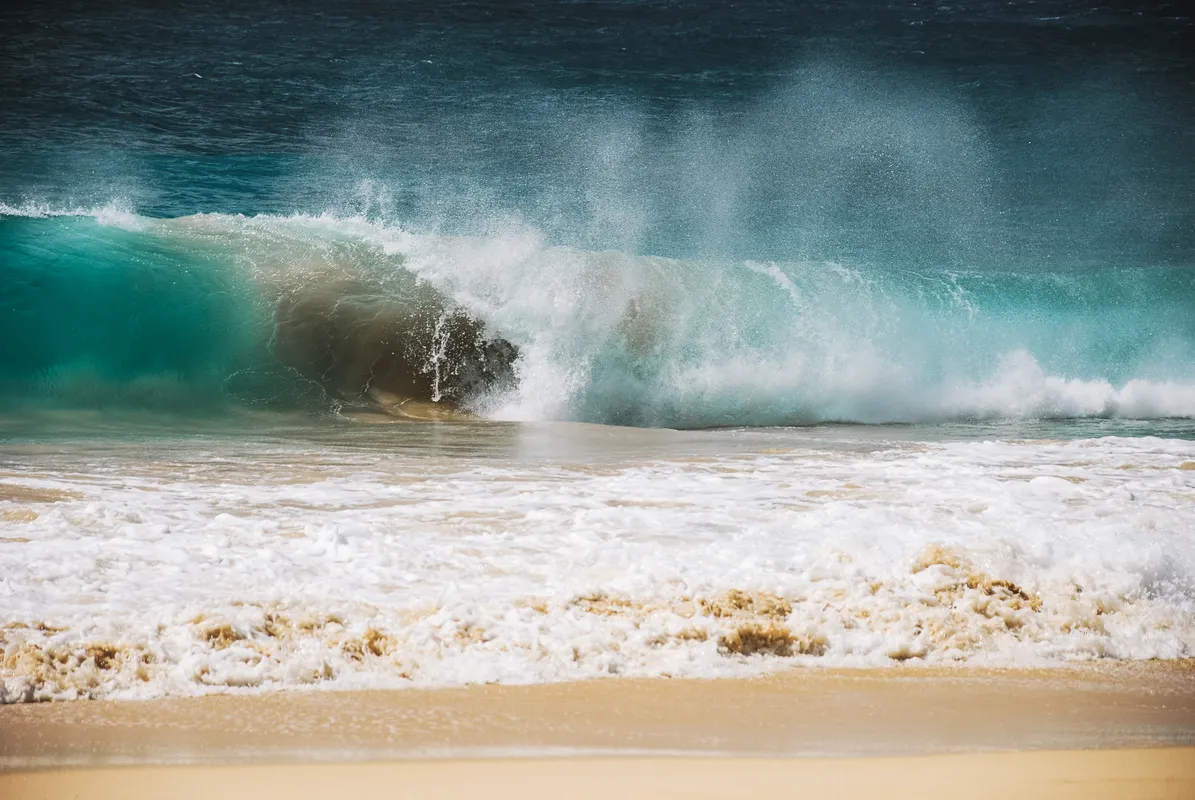
Photo by Damien Schnorhk via Pexels
Waikiki and Magic Island: the no-car, no-excuses classic
Staying in Waikiki? You do not need a car or a plan. Walk to the sand near the Kapiolani Park end, where there are fewer towels per square foot, and you have Diamond Head on your left and the sun in front of you. On Fridays the Hilton Hawaiian Village fires off fireworks around 7:45 p.m. as a bonus.
A short drive west, Magic Island at Ala Moana Beach Park is the local move: a calm lagoon, a grassy peninsula, and golden-hour light that makes every phone photo look staged in a good way.

Photo by Jess Loiterton via Pexels
Lanai Lookout and Makapuu: trade sand for altitude
Want drama instead of a beach? The southeast lookouts swap sand for height and a horizon dotted with the islands of Molokai and Lanai. Lanai Lookout is a roadside pull-off with almost no effort. Makapuu Point rewards a paved two-mile round-trip walk with a lighthouse and a cliff-edge view.
Tantalus and Puu Ualakaa: the city-lights frame
This is the one for the skyline crowd. From the lookout above Honolulu you get the whole city, Diamond Head, and the ocean in one frame as the lights flicker on. Mind the gate hours — Puu Ualakaa via Hawaii State Parks closes in the evening, so check before you commit to a late one.
Kaena Point: the wild one
The end of the road, literally. A flat trail of about 2.5 miles leads to the westernmost point on Oahu — no facilities, no railings, no crowds, just the rawest sunset on the island. Bring water, a small tripod for the shot, and a headlamp for the walk back. Start early enough to hike out before full dark. This is the advanced option, not the flip-flops-and-a-mai-tai one.
What to bring to a sunset on Oahu
Pack light, but pack right. The difference between a great evening and a cut-short one is usually one forgotten item. Here is the short list:
- Reef-safe sunscreen. The 4 p.m. sun still burns, and Hawaii law bans the chemicals in most mainland brands. Buy reef-safe sunscreen before you fly — it costs noticeably more on-island.
- A light layer. The trade winds pick up as the sun drops, especially on the windward side and at the lookouts. A thin windbreaker turns "we had to leave" into "we stayed for the colors."
- Something to sit on. A packable beach blanket or mat beats wet sand and saves your clothes.
- A small tripod. Phones shoot a far better sunset on a steady base, and it is the only way to catch the green flash. A small tripod lives in a daypack and weighs nothing.
- Water and a snack. You are arriving 45 minutes early and staying 20 minutes late — that is over an hour. Plan for it.
- Cash or a parking app. Some lots and meters near Waikiki and Ala Moana still want coins or an app payment. Sort it before you are scrambling at golden hour.
What you do not need: a fancy camera, a guide, or a reservation. The best sunset on the island asks for almost nothing. That is the beauty of it.
Sunset on the other islands
Island-hopping? The short version:
- Maui: Haleakala summit at 10,000 feet puts you above the clouds (sunset is open; sunrise needs a reservation). At sea level, Kaanapali and Wailea deliver classic west-facing beach sunsets.
- Kauai: the west-side Polihale and Hanalei Bay headline.
- Big Island: the Mauna Kea visitor station at sunset is otherworldly.
All stunning. But my bias, fully disclosed: the easiest, most reliable, do-it-every-night sunset in the state is on Oahu's west coast — which is conveniently where we work. Sorting out when to come in the first place? Pair this with our month-by-month guide to the best time to visit Hawaii.
Turn a free sunset into a memory
Watching a sunset is free. Turning it into a memory takes about ten more minutes of thought. Three things the guidebooks skip:
- The green flash is real. On a clear horizon, the last sliver of sun can flash green for about a second — an actual atmospheric effect, not a tall tale. NOAA explains the optics. You need a flat ocean horizon and no clouds at the waterline, which is exactly what the west side hands you.
- Leave it better than you found it. Reef-safe sunscreen, pack out everything, no stacked rocks. Hawaii is a place people live, not a backdrop. (Buy reef-safe sunscreen before you fly — it is pricier on-island.)
- Skip the booze-barge. Here is my one strong opinion: the sunset dinner cruise is the most overrated sunset activity on Oahu. You pay around $150 a person to watch the sky from a crowded, swaying deck that is motoring away from the island you came to see, while a buffet goes cold. The best seat for a Hawaii sunset is on the sand, not moving, facing west. If a boat is non-negotiable, at least book a small-group sunset sail rather than a 200-person party deck.
Notice the pattern. The difference between a nice sunset and one you never forget is not the spot — it is whether you have to manage it. Standing in a parking lot juggling your phone and a gas-station snack is watching a sunset. Sitting down to a styled table with the boards already out, your playlist already going, and a lei already around your neck is having one.

Photo by Hannah Nelson via Pexels
That is the whole job at Hawaii Picnics by Wember: a fully styled beach picnic on Oahu's best west-facing shores, set up before you arrive and cleared after you leave, every permit handled, starting at $349. We have done it more than 400 times, it is rated 5.0, and the sun has never once been late.
So here is your next step. Pick your date, see the picnic packages, and let us build the evening around the light. If you would rather talk it through first, tell us what you have in mind. Either way — get to a west-facing beach 30 minutes early. The best show in Hawaii is about to start, and it is still free.
FAQ: Hawaii sunsets
What time does the sun set in Hawaii?
Roughly 5:55 p.m. in December and January, and as late as 7:15 p.m. in June and July, using Honolulu as the reference. Hawaii does not observe daylight saving time, so the times shift gradually. Check the exact day before you plan around it.
Which Hawaiian island has the best sunsets?
All of them deliver, but Oahu's west and south shores — Ko Olina, Waikiki, the North Shore — are the most accessible and consistent. Maui's Haleakala summit is the most dramatic if you want elevation.
What is the best sunset spot on Oahu?
For an open-ocean beach sunset, Ko Olina Lagoons on the west side: calm water, easy parking, an unobstructed western horizon. For city-and-sea, Magic Island at Ala Moana. For drama, Lanai Lookout on the southeast coast.
Should I watch sunset on the east or west side of Oahu?
West side for sunsets, windward (east) side for sunrises. The sun sets over open ocean on the leeward coast, which also tends to be drier and clearer at golden hour.
What time should I arrive for sunset?
About 30 to 45 minutes early to catch golden hour and find a spot, and stay 15 to 20 minutes after the listed time for the most vivid colors.
What is the green flash?
A brief green flash that can appear at the top of the sun as it disappears below a clear ocean horizon — a real atmospheric refraction effect, best seen on a cloudless evening over flat water.
Disclosure: Some links on this page are affiliate links. If you book through them we may earn a small commission, at no extra cost to you.